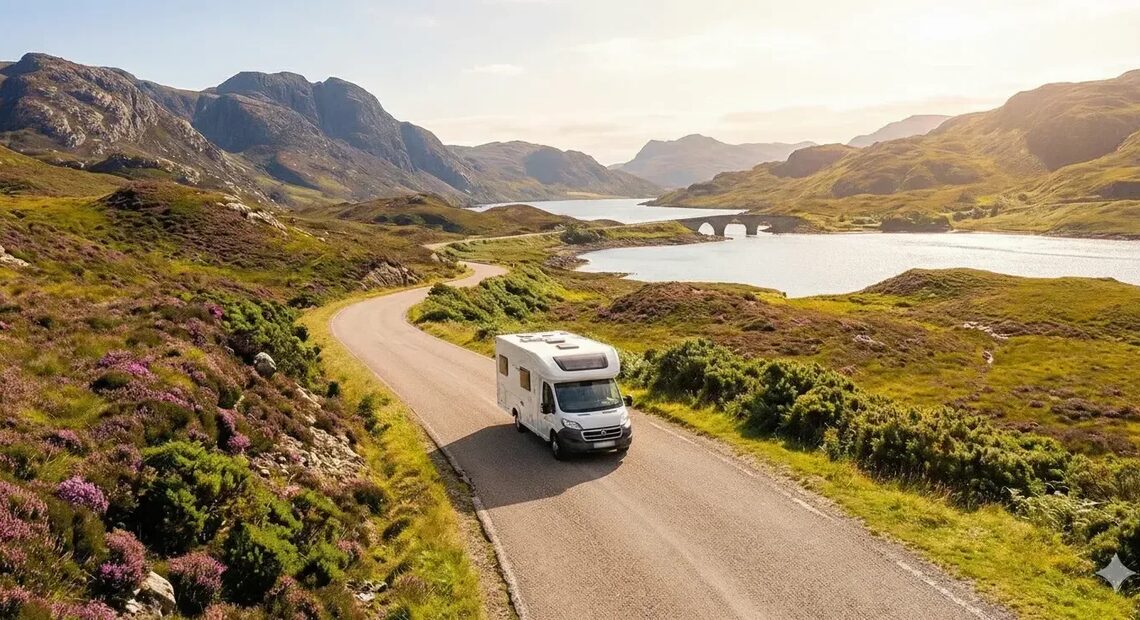
The Ultimate Guide to Touring Scotland’s North Coast 500 in a Caravan or Motorhome
If you are looking for one of the most unforgettable road trips in the UK, Scotland’s North Coast 500 (NC500) should be at the very top of your list.
Often compared to America's Route 66, this spectacular 500+ mile circular route takes you through some of the most dramatic landscapes in the UK - from rugged coastlines and white-sand beaches to quiet Highland villages and towering mountain passes.
For caravan and motorhome owners, it is an incredible experience. However, it is also a route that strictly rewards good planning and preparation.
Here is everything you need to know before you hitch up or turn the key.
What Is the North Coast 500?
The North Coast 500 is a highly scenic loop around the northern Highlands of Scotland, officially starting and finishing in the city of Inverness.
The route takes in:
- The historic east coast heading north towards John o’ Groats.
- The remote, dramatic, and rugged north coast.
- The stunning west coast, weaving through areas like Torridon and Ullapool.
You can drive the route in either direction, but many seasoned tourers choose to go anti-clockwise, saving the highly dramatic, mountainous scenery of the west coast for the climax of the trip.
When Is the Best Time to Go?
Timing dictates your entire experience on the NC500.
- Spring (April to June): Arguably the best time to travel. You benefit from longer daylight hours, quieter roads, and significantly fewer midges.
- Summer (July to August): The absolute peak season. Expect the warmest weather, but also heavily congested roads and campsites that book up months in advance.
- Autumn (September to October): A fantastic balance. You will experience beautiful autumnal scenery, fewer crowds, and generally calmer conditions.
- Winter (November to March): Highly challenging. Shorter days, largely closed campsites, and potentially treacherous driving conditions make this suited only for highly experienced, off-grid tourers.
Is the NC500 Suitable for Caravans and Motorhomes?
Yes - thousands of people successfully complete the route each year in leisure vehicles. However, it is absolutely nothing like driving on standard UK A-roads or motorways.
You will frequently encounter:
- Single-track roads (especially on the west and north coasts).
- Blind summits, tight bends, and steep gradients.
- Very limited overtaking opportunities.
If you are towing a caravan or driving a large motorhome, taking your time is mandatory.
Essential Driving Etiquette:
- Use passing places correctly: Pull into passing places on your left to let oncoming traffic pass, or to allow faster traffic behind you to overtake. Never cross the road to pull into a passing place on the right.
- Avoid the Bealach na Bà: This famous mountain pass is entirely unsuitable for towed caravans and large coachbuilt motorhomes. Use the designated slip road (the A896) instead.
- Plan your fuel: Distances between rural fuel stations can be vast. Fill up when you have the chance, not when the light comes on.
Planning Campsites and Overnight Stops
Because the NC500 is incredibly popular, booking your pitches ahead of time is strongly recommended, especially during the spring and summer months.
The route offers a great mix of full-service campsites with electric hook-ups, dedicated caravan parks, and basic motorhome stopovers.
A crucial note on Wild Camping: Unlike tent camping, which is permitted under the Scottish Outdoor Access Code, you cannot legally wild camp in a motorized vehicle (including motorhomes and caravans) without the explicit permission of the landowner. Always use designated sites or approved overnight parking areas.
How Long Should You Allow?
While some drivers rush the route in under a week, doing so in a leisure vehicle means you will spend your entire holiday stressed behind the wheel.
- 7 to 10 days: Gives you a good, steady balance of driving and sightseeing.
- 10 to 14 days: The ideal timeframe. It allows for a relaxed pace, shorter driving days, and plenty of time to set up camp and explore the local areas on foot.
Route Highlights You Shouldn’t Miss
- East Coast: Stop at Chanonry Point (one of the best places in Europe to spot bottlenose dolphins from the shore) and explore the stunning, French-chateau style of Dunrobin Castle.
- North Coast: Take in the iconic sights of John o’ Groats and Duncansby Head, walk through the massive Smoo Cave in Durness, and relax on the pristine Balnakeil Beach.
- West Coast: Visit Achmelvich Beach (famous for its turquoise waters and white sands), drive through the towering Torridon Mountains, and explore the rugged Applecross Peninsula.
Driving & Safety Tips
Highland weather can change in a matter of minutes, making preparation key to a safe trip.
- Download your route maps offline in advance, as mobile 4G/5G signal is notoriously patchy on the west coast.
- Check the local weather forecasts every single morning before hitching up.
- Watch out for roaming wildlife, particularly deer and sheep wandering onto single-track roads.
- Never park or stop your vehicle in the middle of a passing place or on the road to take photos.
- Always carry emergency essentials, including drinking water, warm clothing, snacks, and a first-aid kit in your towing vehicle or motorhome cab.
What About the Midges?
If you are travelling between late May and September, you will encounter the infamous Highland midge—especially near water on the west coast.
To keep them at bay:
- Pack a high-quality insect repellent (Smidge is highly recommended locally).
- Keep your caravan or motorhome flyscreens strictly closed during the early morning and late evening when the air is still.
- Plan to cook inside your vehicle rather than using the outdoor BBQ on particularly still, damp evenings.
What to Pack for the NC500
Alongside your standard touring gear, make sure your vehicle is equipped with these essentials before crossing the border:
- Heavy-duty levelling ramps (many Highland pitches are beautifully rugged, but rarely flat).
- Extra-long electric hook-up cables.
- Robust fresh and waste water containers (like Aqua Rolls and Wastemasters).
- A fully stocked basic toolkit, spare fuses, and a tyre inflation kit.
(Need to stock up before your trip? Visit our fully-stocked accessory shops at the Couplands Worksop or Louth branches to grab all your touring essentials.)
Touring Responsibly
The NC500 brings vital tourism to remote communities, so being a considerate traveller is essential to preserving the route for future generations.
- Do: Support local farm shops, pubs, and cafes. Leave your pitch exactly as you found it, and only empty chemical toilets at designated disposal points.
- Avoid: Blocking passing places, parking overnight in unauthorized laybys, and leaving any waste behind.
Final Thoughts
The North Coast 500 is easily one of the most rewarding touring routes in Europe - especially for caravan and motorhome owners who enjoy taking their time and embracing the journey.
At Couplands Caravans, we know that total peace of mind on a 500-mile road trip starts long before you leave the driveway. Whether you need an AWS-approved service to ensure your vehicle is road-ready, or you are looking to upgrade your setup entirely before the big trip, our expert team is here to help.
Plan well, take your time, and enjoy every single mile.