A cold caravan can spoil a good trip. The right heating setup keeps you comfortable well into autumn and winter, without draining your gas or tripping the campsite hook-up.
Most caravans already have a capable heating system fitted. Knowing how yours works, what it runs on and what it costs makes a real difference. Here’s how the main caravan heating options compare, how to run them efficiently and how to use them safely.
What Caravan Heating Options Are There?
Most UK caravans use either blown-air heating or wet central heating, running on gas, electric or both. Motorhomes can also use diesel heating. Portable heaters can top up warmth, but they shouldn’t be your main heat source.
Your handbook tells you which system your caravan has, so check it before buying anything extra.
Blown-air heating
A large share of UK caravans use blown-air systems from Truma or Whale. A gas burner heats the air, then a fan pushes it through ducting to outlets around the caravan. Many systems also have an electric element, such as Truma Ultraheat, so the same heater can run off your hook-up.
Blown air warms a cold caravan quickly. The fan does need power to run, so the system still relies on your battery or hook-up.
Wet central heating
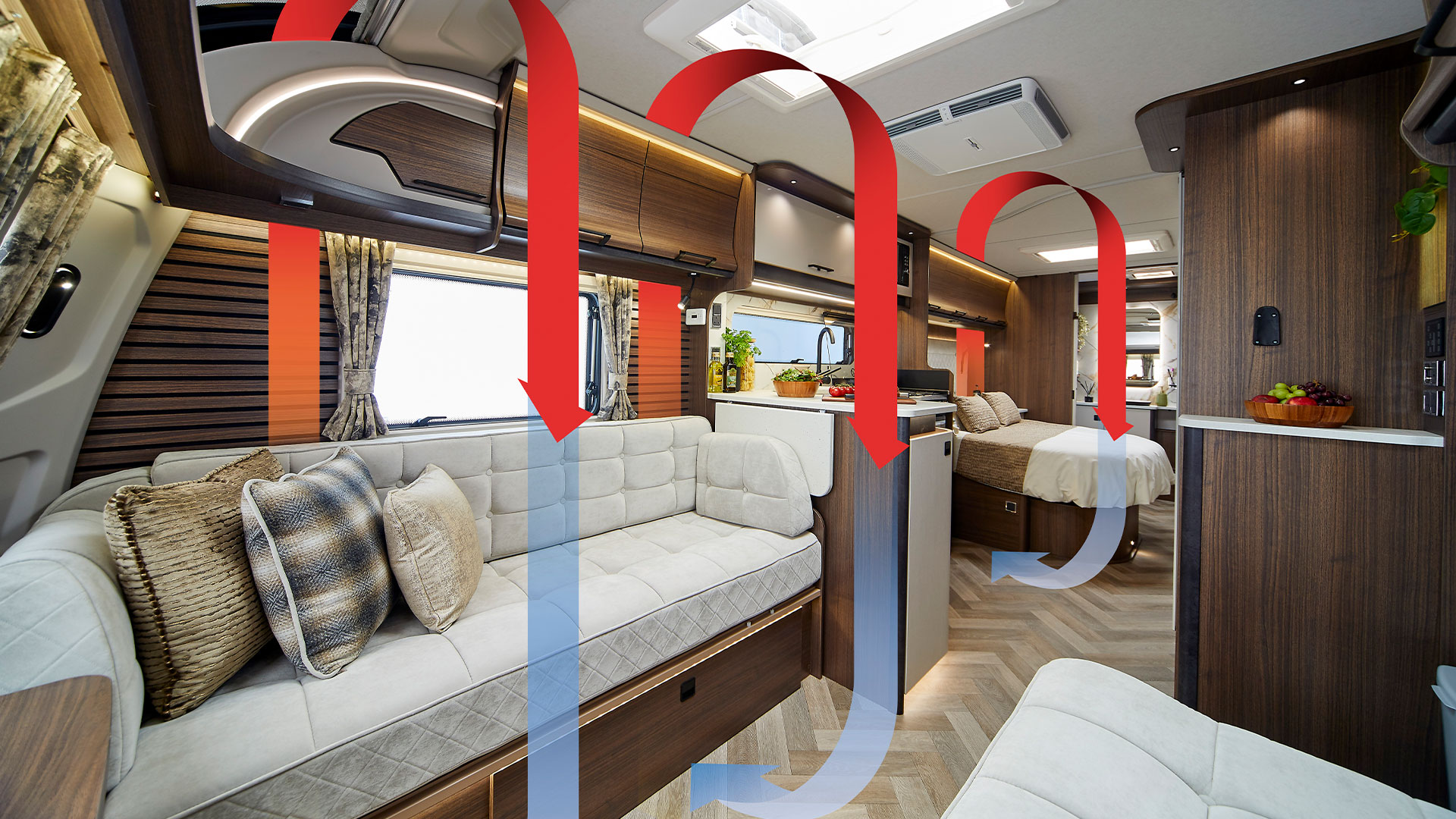
Wet systems, mostly from Alde, pump heated fluid through radiators or convectors around the caravan. The heat feels gentler and more even, much like central heating at home. Some models add underfloor heating as well.
You’ll find Alde in many higher-spec caravans, including models from the Bessacarr By Design range. It can run on gas, electric or both together, which helps on very cold nights. The heating fluid needs changing periodically, so ask about it at your annual service.
Diesel heating
Diesel heaters, such as the Truma Combi D, draw fuel from the vehicle’s own tank. That makes them a motorhome option, because a touring caravan has no fuel tank to draw from. They suit motorhome owners who often stay off-grid and want to save their gas. Always have one installed by a qualified professional.
Portable heaters
A small electric heater can top up warmth on hook-up. Choose a thermostatic model with tip-over and overheat protection, and keep it clear of bedding and curtains.
Never use a portable gas heater inside a caravan. Your built-in heater is room-sealed and vents outside, but a portable gas heater releases fumes and moisture straight into the living space.
Gas or Electric: Which Costs Less to Run?
It depends on the campsite. If electricity is included in your pitch fee, electric heating is usually the cheaper choice. On metered pitches, compare the site’s unit price with the cost of a replacement gas cylinder.
Hook-up power is the other limit. A 10A supply gives you roughly 2.3kW, and a 16A supply around 3.7kW. A 2kW heater uses most of a 10A pitch on its own, so run the kettle and microwave one at a time. Our guide to electric hook-up explains how to work out your load.
Gas use climbs quickly in cold weather. Check your cylinder before each trip and carry a spare if your payload allows. For winter touring, use propane rather than butane, because butane struggles to vaporise around freezing.
Many owners combine the two. Electric covers the background heat, while gas lifts the temperature quickly on cold evenings.
How to Get More From Your Caravan Heating
- Check your thermal grade. Caravans rated Grade 3 under EN 1645-1 are tested to stay comfortable with -15°C outside. Your handbook will show the grade.
- Use a low background setting overnight. It keeps the temperature steady and helps stop internal pipes freezing.
- Close blinds at dusk. They cut heat loss through the windows.
- Keep outlets clear. Bags in front of blown-air vents stop heat reaching the rest of the caravan.
- Use thermal screens or an awning. Both help keep the door end warmer.
Warm air also carries moisture, which settles on cold windows overnight. Our guide to preventing condensation in a caravan or motorhome covers the fixes. For the bigger picture on cold-weather trips, read Can You Use a Caravan or Motorhome All Year Round?
Is Your Caravan Heating Safe?
Built-in caravan heaters are safe when they’re serviced, and the ventilation is kept clear. Most problems come from blocked vents, poor maintenance or using the wrong appliance indoors.
Keep fixed vents open
Fixed floor and roof vents are part of the caravan’s safety design. Never cover them to keep heat in, even on the coldest nights.
Fit a carbon monoxide alarm
Carbon monoxide has no colour or smell. Use an alarm marked EN 50291-2, which covers leisure vehicles, and test it before every trip. If it sounds, turn off gas appliances, get everyone outside and call for help.
Book an annual service
Heating and gas checks are part of an annual service. Our servicing team covers heating, gas safety and electrics at both Louth and Worksop. If you notice soot, yellow flames or unusual smells, stop using the heater and book it in.
Frequently Asked Questions
1. Can I leave my caravan heating on overnight?
Yes. Built-in blown-air and wet systems can run overnight on a low setting. Just keep the fixed vents clear and make sure your CO alarm works. Only leave a portable heater running overnight if its maker says it’s safe to do so.
2. Is gas or electric caravan heating better?
Neither wins everywhere. Electric is usually cheaper when hook-up is included in the pitch fee, while gas works anywhere and heats faster. Many caravans let you run both together on cold nights.
3. Do I need a carbon monoxide alarm with electric heating?
Yes. Electric heaters don’t produce carbon monoxide, but your hob, oven and gas heater can. A CO alarm protects you whenever any gas appliance is in use.
Compare Caravan Heating Options at Couplands
If you’re choosing your next caravan, compare the heating system alongside the layout and weight. Browse our new caravans and used caravans, and our team can talk you through the system fitted to each model.
Couplands Caravans has been a family-run dealer since 1975, with teams in Louth and Worksop.
Louth: 01507 603496
Worksop: 01909 475220