Gas runs the hob, oven and heater in most caravans, and often the fridge and water heater too. Choosing the right cylinder and changing it safely are among the first jobs every new owner learns.
This guide covers propane and butane, cylinder sizes, exchange and refillable options, and how to switch overstep by step.
Which Caravan Gas Bottles Should You Use?
Propane is the best all-year choice, while butane suits summer touring. Both are LPG, but they behave very differently in the cold.
Butane stops vaporising properly at around 0°C. On a frosty morning, a butane cylinder can still contain gas but fail to supply the hob or heater. Propane keeps working down to around -40°C, so it’s the standard choice for winter touring.
Butane cylinders hold a little more gas for their size, though. For that reason, some owners run butane in summer and switch to propane for autumn and winter.
Can you switch between propane and butane?
On most UK caravans built from around 2004, yes. These use a 30mbar regulator fixed to the caravan, which works with both gases. You simply change the pigtail hose that connects the cylinder to the regulator, because propane and butane cylinders use different fittings.
Older caravans usually have the regulator fitted to the cylinder itself, set at 28mbar for butane or 37mbar for propane. On those, you need the matching regulator for each gas. If you’re not sure which setup you have, check your handbook.
Which Size Cylinder Should You Choose?
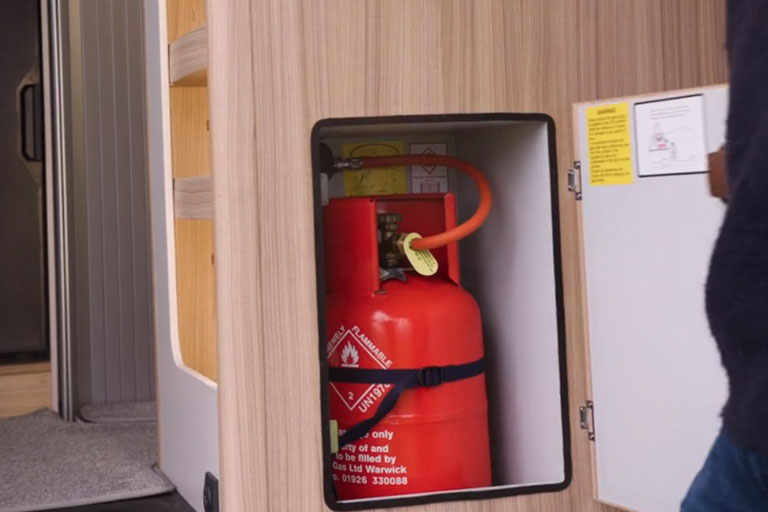
Most caravan gas lockers take two cylinders, so you can run one and keep a spare. The most common choices are:
- 6kg propane (red Calor): the go-to cylinder for year-round touring.
- 7kg butane (blue Calor): a popular summer option.
- Campingaz 907: a small butane cylinder that’s easy to find in Europe.
- 13kg propane or 15kg butane: better for static use, as many lockers can’t take them.
Weight matters as well as fit. On most caravans the gas locker sits at the front, so a heavier cylinder adds to your noseweight. Our guide to caravan weights explains how that affects your payload.
Exchange or Refillable Cylinders?
Exchange cylinders
Exchange is the simplest option. You sign a refill agreement for your first cylinder, then swap empties for full ones at a stockist. Calor has the widest network across the UK.
Refillable cylinders
Refillable systems, such as Gaslow and Safefill, are filled at LPG autogas pumps. They cost more upfront, but each refill is usually cheaper than an exchange. They’re also popular for European trips, where UK exchange cylinders aren’t accepted.
Only refill a cylinder designed for it. Also check the forecourt allows cylinder refilling first, because some don’t.
How to Change a Caravan Gas Bottle
Changing a cylinder is a routine owner job and only takes a few minutes. Follow your handbook alongside these steps.
- Step 1: Turn everything off. Switch off all gas appliances and keep flames and cigarettes well away.
- Step 2: Close the cylinder. Turn a propane handwheel clockwise to close it. On a clip-on butane cylinder, turn the regulator switch to off.
- Step 3: Disconnect the pigtail. Propane fittings use a left-hand thread, so they undo clockwise. Clip-on butane fittings release when you lift the collar. Never force a fitting.
- Step 4: Check the new cylinder. Make sure it holds the right gas, the valve seal is intact and there’s no visible damage.
- Step 5: Connect it. Fit the pigtail and tighten it as the fitting’s instructions say, without overtightening. Then secure the cylinder with the locker strap.
- Step 6: Check for leaks. Open the valve slowly and spray leak detection fluid or soapy water on the joint. Bubbles mean a leak, so close the valve and refit the connection.
Never use a flame to look for a leak. Once you’re connected, the hob may take a few seconds to light while air clears from the pipe.
What to do if you smell gas
Turn off the cylinder valve if it’s safe to do so. Don’t use light switches or naked flames. Open the door and windows, get everyone out and call your gas supplier’s emergency line or a qualified engineer.
Storing Gas Bottles Safely
- Keep cylinders upright in the gas locker and strap them in for travel.
- Never block the locker’s drop-out vent. LPG is heavier than air, so it needs a way to escape.
- Don’t carry cylinders inside the caravan or store them in the awning.
- Turn the gas off at the cylinder while towing, and run the fridge on 12V instead.
- Close the cylinder valve whenever you’re not using gas.
Checking Your Regulator and Hoses
Pigtail hoses and regulators wear over time. Look for cracks, stiffness or damage whenever you change a cylinder. Hoses carry a date stamp, and a common rule is to replace them every five years, or sooner if they show wear.
Any work on the regulator or fixed pipework needs a qualified engineer. Gas safety checks are part of every habitation service at our Louth and Worksop service centres, carried out by AWS-approved technicians. Our beginner’s guide to caravan and motorhome servicing explains what’s included.
For more on gas use in cold weather, read Can You Use a Caravan or Motorhome All Year Round?
Frequently Asked Questions
1. What size caravan gas bottle do I need?
Most tourers use a 6kg propane or 7kg butane cylinder, with a second as a spare. Check your gas locker size and your handbook before buying anything larger, as bigger cylinders are heavy and add to noseweight.
2. How do I know when my gas cylinder is nearly empty?
Weigh it. The empty weight is stamped on the cylinder collar, so the difference tells you how much gas is left. You can also fit a gas level gauge. Don’t rely on the flame alone, because butane can stop working in the cold before the cylinder is empty.
3. Can I change a caravan gas cylinder myself?
Yes. Changing a cylinder is a normal owner job. Follow your handbook, check for leaks afterwards and leave any work on the regulator or fixed pipework to a qualified engineer.
Get Ready for Your Next Caravan Adventure
Use propane for cold-weather trips, carry a spare and check your hoses every time you switch over. Those three habits cover most of what your caravan gas bottles need.
Browse our accessories for touring essentials, or book a service if your regulator or hoses need attention. Couplands Caravans has been a family-run dealer since 1975, with teams in Louth and Worksop.
Louth: 01507 603496
Worksop: 01909 475220