The most useful caravan holiday tips with kids are practical ones: keep essentials accessible, prepare simple food, plan suitable stops and have a backup ready for boredom or motion sickness.
During the school summer holidays, heavy traffic and busy service areas make towing journeys unpredictable. Allow extra time, prepare for delays and treat your arrival time as a rough guide rather than a deadline.
1. Pack a Separate Travel-Day Bag
Do not pack everything inside caravan cupboards or motorhome lockers. Once you load the outfit, you should not need to search through it at a roadside stop.
Keep one easy-to-reach bag containing:
- Drinks and non-messy snacks
- Wet wipes, tissues and hand sanitiser
- Spare clothes and a lightweight layer
- Sun cream, hats and medication
- Sick bags and sealable waste bags
- Charging cables and power banks
- A favourite comfort item
Pack a separate “arrival bag” too, with toilet roll, toothbrushes, pyjamas and anything the children’s bedtime routine needs.
That way you can feed and settle everyone even when traffic delays you or pitching takes longer than expected.
2. Rotate Entertainment During the Journey
One film or tablet rarely covers a full journey. Batteries run down, mobile signal disappears and children lose interest quickly.
Mix downloaded programmes, audiobooks, family playlists, reusable activity books, magnetic games and spotting challenges. Introduce activities gradually rather than handing over everything as soon as you leave home.
Saving one new activity for the final stretch helps enormously when everyone’s patience starts to wear thin.
Avoid toys with lots of loose pieces, which vanish under seats within minutes. Our guide to clever caravan storage solutions has ideas for keeping smaller items contained once you arrive.
3. Plan Stops Around Your Touring Outfit
An unplanned stop gets harder when you are towing, because small filling stations and crowded car parks rarely leave room for the full outfit.
Check your route before leaving and identify service areas or stopping places with straightforward access. Satellite images and recent visitor information help you picture the layout, although you should always follow the signs and restrictions you find on arrival.
Plan stops around the youngest child’s likely toilet and meal schedule, and stay ready to stop earlier.
At each break, get everyone to use the toilet, have a drink and move around. A short active break usually does more good than keeping children in their seats while the adults refuel or queue for food.
4. Keep Travel-Day Food Simple
Roadside meals should portion easily and clean up quickly.
Sandwiches, wraps, crackers, fruit and familiar snacks work far better than anything needing plates, cutlery or preparation at a busy service area.
Divide snacks into individual containers so you do not have to unpack the whole cool box every time somebody gets hungry.
Keep chilled items in a cool bag or cool box with frozen gel packs. The Food Standards Agency recommends planning ahead so food stays cool until you eat it.
Carry refillable water bottles and offer drinks steadily throughout the journey. However, a large drink immediately before setting off tends to produce an emergency stop within the hour.
For your first evening, take a meal needing almost no preparation. A picnic, pre-cooked dish or simple cupboard meal saves you when you arrive late and still need to position and set up the caravan or motorhome.
5. Prepare for Motion Sickness
Motion sickness causes dizziness, nausea and vomiting. Children often feel worse on winding roads, when reading or when looking down at a screen.
The NHS recommends looking straight ahead at a fixed point, getting fresh air where possible and using conversation, music or singing as a distraction. It also advises against heavy or spicy meals shortly before or during travel.
Encourage a child who feels unwell to look outside rather than down at a book, game or device. Keep the vehicle comfortably ventilated, and stop safely as soon as symptoms begin rather than waiting for them to worsen.
Keep the following within immediate reach:
- Sick bags
- Wet wipes and tissues
- Drinking water
- Spare clothing
- A small towel
- Sealable bags for soiled items
Speak to a pharmacist before travelling about any motion-sickness medicine, particularly for younger children, because different products carry different age restrictions and instructions.
6. Load Safely and Keep Essentials Reachable
Clothes, bikes, outdoor toys, food and children’s equipment all eat into the caravan or motorhome’s payload.
Do not fill every available storage space without first checking the vehicle’s weight limits. Secure heavy items and load them according to the manufacturer’s guidance. If you are unsure where to find your figures, our guide to caravan weights and easy towing explains what to look for.
Before towing, check the coupling, breakaway cable, tyres, wheels, lights, mirrors and loading. GOV.UK recommends completing towing safety checks every time you travel, and our beginner’s guide to towing a caravan walks through the sequence.
Finally, keep anything you need during the journey inside the tow car rather than relying on access to the caravan.
7. Know the Rules on Who Travels Where
Family touring brings a few non-negotiable safety rules, so it helps to get everyone clear on them before you set off.
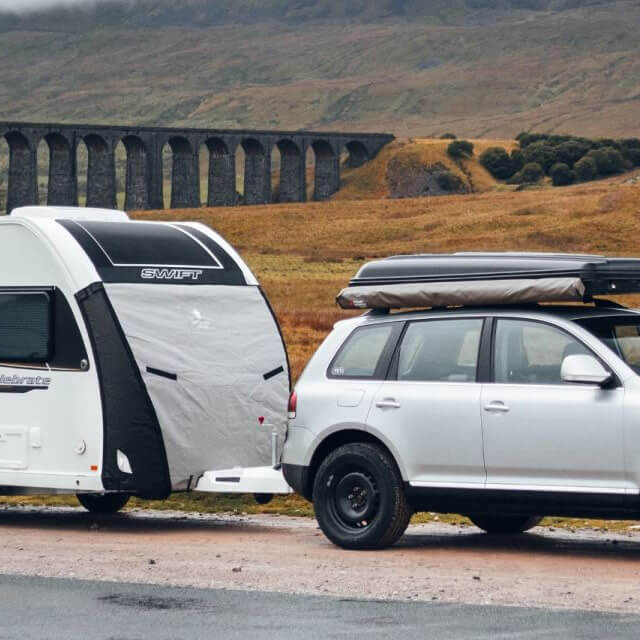
Nobody travels in a towed caravan. All passengers, children and adults alike, must ride in the tow car with an appropriate seat and restraint. A caravan has no travel seats, no seat belts and no crash protection.
Every child needs the correct restraint. In Great Britain, children normally need an appropriate child car seat until they reach 12 years old or 135cm tall, whichever comes first.
In a motorhome, passengers stay in designated travel seats. Children should not walk around, use the kitchen or sleep in an unrestrained bed while the vehicle is moving.
Secure heavy or hard objects. Anything loose in the cabin becomes a hazard under sudden braking, so stow it properly before you pull away.
Make Arrival Easier for Everyone
Arrival is often the most demanding part of the day. Adults need to reverse, level the vehicle and connect services, exactly when children are tired and desperate to explore.
Give each child a safe, age-appropriate task. They could carry lightweight bedding, organise their activity box or work through an arrival checklist with an adult.
Set clear boundaries around the pitch, and keep children well away from the tow car, caravan wheels, electric hookup and any moving equipment.
Have a familiar snack or activity ready while you finish the main setup. Pitching, unpacking, cooking and entertaining everyone at once creates pressure nobody needs on day one.
In hot weather, get the blinds and rooflights sorted before the interior heats up. Our guide to keeping a caravan cool in a heatwave covers the quickest wins.
Keep Your Summer Touring Schedule Realistic
School-holiday traffic turns a manageable drive into a long day. Build extra time into your route and avoid booking anything important immediately after arrival.
Travelling outside the busiest periods can help, although not if it leaves the driver tired before the journey even begins. A calm, alert driver matters far more than reaching the site an hour earlier.
Book your pitches early, too. Popular family sites fill months ahead for the summer holidays, and late availability tends to mean longer drives or less suitable pitches. Our roundup of the best UK caravan parks for a summer staycation is a useful starting point.
In short, the best caravan holiday tips with kids all reduce avoidable stress. Pack separately for the journey, plan suitable stops, keep meals simple and expect delays.
Prepare for Your Next Family Tour
A well-organised journey helps everyone arrive safely and settle into the holiday more easily.
If you are looking for a layout that works better for family touring, our guide to buying a 4 berth caravan is a good place to start. You can also browse our caravans and motorhomes, or pick up touring accessories from either branch.
Call Louth on 01507 603496 or Worksop on 01909 475220, or get in touch online.
Frequently Asked Questions
How often should we stop when travelling with children?
Plan regular opportunities for toilets, drinks and movement, then stop sooner if a child becomes uncomfortable, unwell or restless. Check in advance that your planned stops can take a caravan outfit or larger motorhome.
What are the best road-trip snacks for children?
Choose familiar foods that portion easily and will not melt or spill. Keep chilled items in a properly prepared cool bag, and avoid heavy meals for children who get motion sick.
Can children travel inside a caravan while it is being towed?
No. Children and adults must travel in the tow car using the appropriate seat and restraint. Nobody should occupy the caravan while it is moving.
What should I pack for a child who gets travel sick?
Keep sick bags, wipes, water, tissues, spare clothing and sealable bags within reach. Encourage the child to look ahead, and stop safely if symptoms begin. Ask a pharmacist about suitable remedies before the journey.