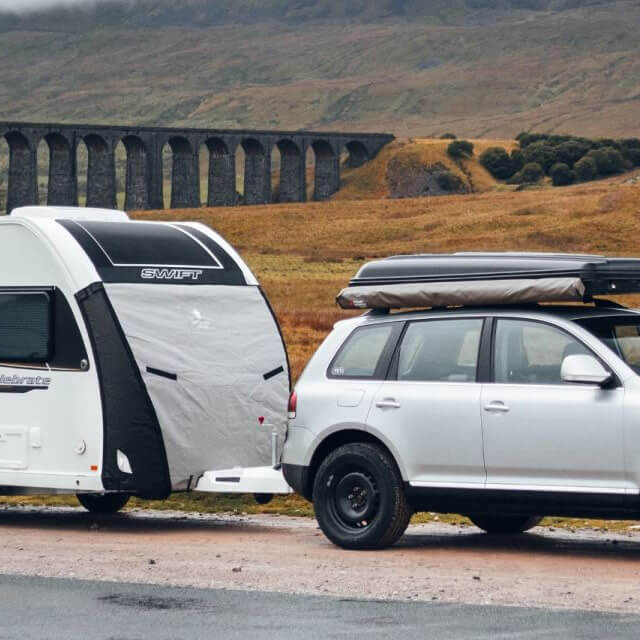
For most caravans stored outside over winter, a good breathable cover can be worth using. The important word is good.
A poorly chosen or badly fitted cover can cause more problems than leaving your caravan uncovered.
The main risks are trapped moisture, abrasion against the bodywork and damage caused by a loose cover moving in strong winds.
So, should I cover my caravan in winter? The answer depends on where you store it, how exposed it is and the cover you use.
Here are the advantages, disadvantages and practical steps to help you decide.
Should you cover a caravan over winter?
A breathable caravan cover usually makes sense if your caravan will remain outside and exposed for several months.
A cover is particularly useful if:
- Your caravan is stored outdoors
- It sits beneath or close to trees
- Leaves and bird mess regularly collect on it
- The storage area is close to a busy road
- The caravan is exposed to coastal conditions
- You want less cleaning to do in spring
There are situations where a cover offers less benefit.
You may not need one if the caravan stays inside a barn, garage or other covered building.
You may also choose to leave it uncovered if you can visit regularly and clean the exterior throughout winter.
Check the rules if you use a commercial storage site. Some UK storage facilities do not allow caravan covers, so never assume you can fit one without asking first.
If you are still deciding whether to store the caravan at all, our guide to winter caravanning in the UK covers touring through the colder months instead.
The most important decision is not simply whether to cover the caravan. It is choosing a suitable cover and fitting it properly.
What are the benefits of covering a caravan?
A caravan cover mainly protects the exterior from dirt, debris and prolonged exposure to the weather.
Tree sap and bird mess are two good reasons to consider one.
Both can be difficult to remove after sitting on the caravan for several months. Leaves and other organic material can also collect around roof fittings and gutters.
A cover reduces how much of this reaches the bodywork.
It can also reduce:
- General road and airborne dirt
- Green algae growth
- Leaf staining
- UV exposure
- Weathering of plastic components
- Exposure around seals and roof fittings
UV damage is easy to associate with summer, but the caravan remains exposed to daylight throughout winter too.
Decals, plastics and other exterior materials continue ageing while the caravan sits outside.
The biggest benefit for many owners becomes obvious in spring.
Remove a properly fitted cover and the caravan will normally need a straightforward clean.
Leave an uncovered caravan beneath trees for several wet months and you may face a much larger cleaning job.
A cover can therefore save time and help keep the exterior looking better.
However, do not treat it as a way to prevent damp.
A cover protects the outside surface. It cannot repair damaged seals or prevent moisture problems inside the caravan.
What are the drawbacks of caravan covers?
The main risks are trapped moisture, abrasion and wind damage.
These problems usually come from using the wrong cover or fitting it badly.
Trapped moisture
Breathability matters more than almost any other feature.
A non-breathable sheet can trap moisture between the cover and the caravan.
Condensation may then sit against the bodywork rather than escaping.
This is why an ordinary plastic tarpaulin is a poor alternative to a purpose-made caravan cover.
It keeps rain off but can trap moisture underneath.
Abrasion
A loose cover can move constantly in the wind.
If there is dirt between the fabric and caravan, that movement can rub against the exterior finish over several months.
Corners and other high-contact areas are particularly vulnerable.
A correctly sized cover should sit securely without excessive movement.
Wind damage
A loose cover can flap heavily during bad weather.
Apart from damaging the cover itself, this movement can catch on aerials, roof lights and other fittings.
Inspect the caravan before fitting the cover and protect vulnerable areas.
Hidden problems
Covering the caravan can make regular checks less convenient.
A small leak, animal activity or exterior damage may remain hidden because you cannot see the caravan properly.
You should still inspect it periodically during winter.
Fitting the cover
Large caravan covers can be awkward and heavy.
Trying to pull one over a caravan alone can lead to damaged fittings or personal injury.
Use two people and suitable access equipment.
Never balance on chairs or lean a ladder against delicate caravan bodywork.
Cost
A good caravan cover is a genuine purchase rather than a disposable sheet.
The cheapest option may not provide the fit, breathability or protection needed for several months outdoors.
A cheap tarpaulin is worse than nothing. If your budget does not stretch to a suitable breathable cover, leaving the caravan uncovered and cleaning it properly in spring may be the better option.
What should you look for in a caravan cover?
Choose a breathable, correctly sized cover that can be secured firmly without rubbing against the caravan.
Breathable fabric
Make this your first requirement.
A proper caravan cover should allow trapped moisture to escape while protecting the exterior from weather and dirt.
Do not replace breathable fabric with ordinary waterproof plastic sheeting.
Correct size
Measure carefully before ordering.
Do not assume the quoted overall length of your caravan is the measurement you need.
Many covers are sized around the caravan body rather than the total length including the A-frame.
Check the cover manufacturer’s measuring instructions before buying.
A cover that is too large may move excessively.
One that is too tight can put unnecessary pressure on seams, corners and fittings.
Soft contact areas
Look for soft or protected sections where the cover touches vulnerable bodywork.
Corners and the front of the caravan can experience more movement than flat sections.
Access panels
Zipped access panels can make winter checks much easier.
They may allow you to open the caravan door without removing the complete cover.
Some designs also provide easier access to service points.
Strong fixing points
Look for secure straps, reinforced corners and durable tie-down areas.
The cover should remain stable when the weather changes.
Some covers also include ventilation features within the fabric or construction.
If you are unsure about sizing or suitable equipment for your caravan, Couplands has accessories teams at both Louth and Worksop who can advise on sourcing the correct products.
How should you fit a caravan cover properly?
Clean and completely dry the caravan before putting the cover on.
Do not fit a cover over months of road grime.
Wind movement can rub trapped dirt against the paint and exterior panels.
Wash the caravan first, then allow it to dry fully.
Inspect the roof
Check for anything that could snag the fabric.
Pay attention to:
- Aerials
- Solar panels
- Roof lights
- Vents
- Sharp trim
- Damaged fittings
Protect sharp edges or protrusions as recommended by the cover manufacturer.
Use two people
Fit a large caravan cover with help.
One person can guide the fabric while the other controls it from the opposite side.
This reduces the risk of catching fittings or dragging the cover across dirty ground.
Use a proper working platform where access is needed.
Do not stand on the caravan roof unless the manufacturer specifically states that it is designed to support you.
Tension it correctly
Secure all straps and fixings.
Aim for snug rather than excessively tight.
Too much slack allows the cover to move and rub. Excessive tension can strain the fabric and contact points.
Keep ventilation clear
Do not obstruct the caravan’s fixed ventilation.
The caravan still needs ventilation throughout storage, even though the outside is covered.
Check it after bad weather
Visit when possible, particularly after strong winds.
Look for loose straps, torn sections or areas where the cover has moved.
Correct small problems before weeks of movement turn them into bodywork damage.
Store the cover dry
When spring arrives, remove the cover on a dry day where possible.
Clean it according to the manufacturer’s instructions and let it dry completely before packing it away.
Storing a wet cover encourages mould and unpleasant smells.
For the other jobs to complete before leaving your caravan for several months, use our full caravan winter storage checklist.
Do you still need ventilation under a caravan cover?
Yes, your caravan still needs ventilation when it is covered.
A caravan cover manages what reaches the exterior.
It does nothing about moisture already inside.
Never block permanent floor or roof vents because the caravan is under a cover.
Prepare the interior for airflow too.
During winter storage:
- Leave cupboard doors ajar
- Open wardrobe doors
- Leave internal lockers open
- Leave the fridge door slightly open
- Stand cushions on edge
- Lift bed bases where practical
- Remove soft furnishings where possible
Moisture traps can also help during storage, particularly if you return periodically to check them.
Remember that a cover and a dehumidifying product do not replace ventilation.
For more advice on managing moisture inside your caravan, read our guide to preventing caravan condensation.
Need help getting your caravan ready for winter?
If you are unsure which storage equipment suits your caravan, speak to the Couplands accessories team.
Couplands has accessories departments at both Louth and Worksop, with specialist sourcing available if the exact item you need is not in stock.
A pre-storage service is also a useful opportunity to check the caravan before the wettest months. Couplands operates service centres at both branches.
Couplands Louth
Tattershall Way, Fairfield Industrial Estate, Louth, LN11 0YZ
01507 603496
Couplands Worksop
Gateford Road, Worksop, S81 7AT
01909 475220
Contact the Couplands team for advice on covers, storage equipment or booking a service.
Frequently Asked Questions
Are caravan covers worth it?
Yes, a good breathable cover can be worth using when a caravan is stored outdoors for several months. It reduces exposure to bird mess, tree sap, leaves and general dirt. The cover must fit securely and allow moisture to escape.
Can you use a tarpaulin to cover a caravan?
No, an ordinary non-breathable tarpaulin is not a good substitute for a caravan cover. It can trap moisture against the bodywork and move in the wind. Use a properly fitted breathable cover designed for caravan storage instead.
Do caravan covers cause damp?
A suitable breathable caravan cover should not cause damp, but a non-breathable cover can trap moisture. Remember that a cover does not solve moisture already inside the caravan. Fixed ventilation should remain clear throughout storage.
Should you cover a caravan stored indoors?
A full winter cover is usually less necessary if your caravan is stored inside a dry, protected building. You may still want some protection from dust. Make sure any covering used allows airflow and does not trap moisture.
How do you stop a caravan cover damaging the paintwork?
Fit the correct size cover to a clean, dry caravan and secure it so it cannot flap in the wind. Pad vulnerable fittings and check the cover regularly. Dirt trapped underneath a loose cover can cause abrasion.
Can you leave a caravan cover on all winter?
Yes, a purpose-made caravan cover can remain fitted throughout winter if the manufacturer allows long-term use. Check it periodically, especially after strong winds. Make sure straps remain secure and the caravan’s permanent ventilation stays clear.