
Autumn does not have to mean the end of your touring season. It does mean changing how you prepare.
Expect wetter roads, softer pitches, colder nights and fewer daylight hours. Your caravan may also have spent most of summer operating in much warmer conditions.
Use this caravan autumn checklist before your next cold-weather trip. Work through the tyres, lights, heating, gas, battery, water system and your touring kit before you leave.
Autumn caravan checklist at a glance
Work through these checks before setting off.
Outside
- Check tyre pressure, tread and age
- Test lights and indicators
- Clean the number plate
- Inspect body seals and roof lights
- Check the awning is clean and dry
Systems
- Test the heating
- Check your gas supply
- Use propane for colder weather
- Fully charge the leisure battery
- Test the water system
- Test smoke and carbon monoxide alarms
Ready to go
- Check loading and noseweight
- Pack waterproofs and warm layers
- Bring torches or head torches
- Confirm your campsite booking
- Check site access and pitch conditions
- Check the weather before leaving
Work through the list in this order and deal with any problems before hitching up.
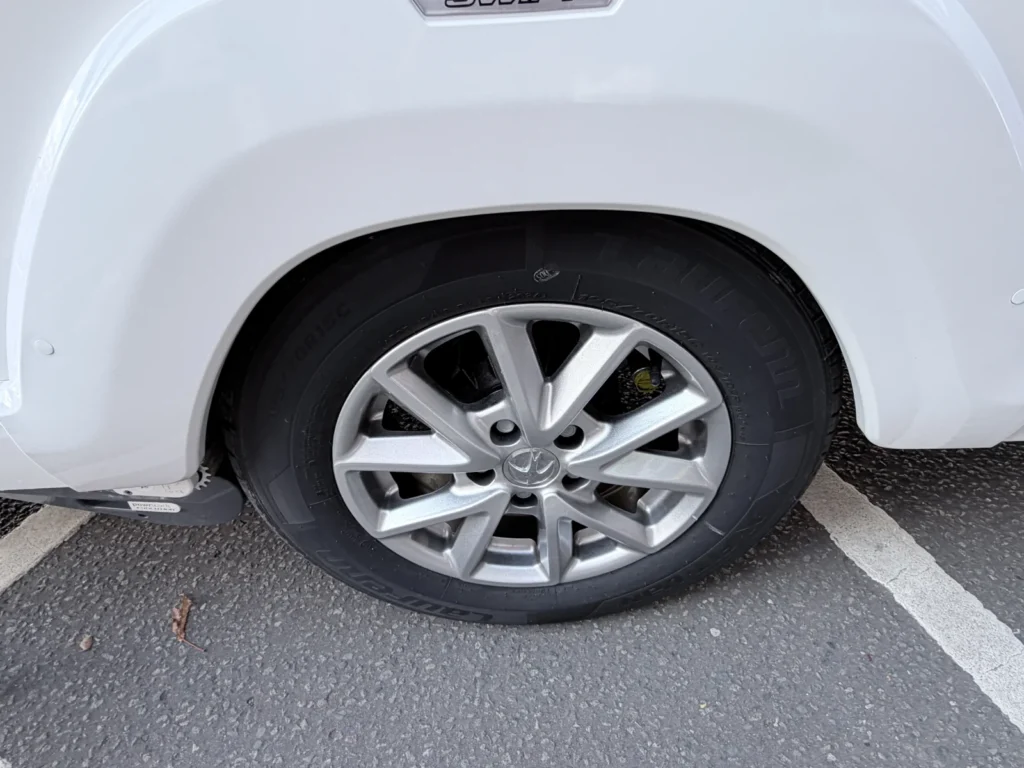
Check the tyres
Start with the caravan tyres.
Set each tyre to the pressure specified for your caravan. Use the manufacturer’s plate or handbook figure rather than the maximum printed on the tyre sidewall.
Inspect the tread across the full width of each tyre.
Check the sidewalls for:
- Cracks
- Bulges
- Cuts
- Kerb damage
- Other visible deterioration
Look at the tyre date code too. Caravan tyres often deteriorate through age before their tread wears out.
Do not forget the spare tyre.
Check its pressure and condition while you are working around the caravan.
Then make sure you actually have the equipment needed to change a wheel.
Check for the jack, wheel brace and locking wheel nut key. Keep them somewhere accessible.
Finding a locking nut key is missing after a puncture can turn a simple wheel change into a recovery call.
Check the lights and electrics
Hitch the caravan to the tow car and test every exterior light before leaving.
Ask someone to stand behind the caravan while you check:
- Sidelights
- Brake lights
- Left and right indicators
- Fog light
- Reversing light where fitted
Clean the lenses and number plate at the same time. Autumn road spray can quickly reduce visibility.
Inspect the 13-pin electrical connector for dirt, corrosion or damage. Make sure it connects securely to the tow car.
Check the breakaway cable too. Look for damage and make sure you attach it correctly before towing.
Inside the caravan, switch on the control panel and test the main interior lights.
Do these checks before every longer trip. A complete lighting check takes only a few minutes and can prevent problems once you are on the road.
Test the heating before you need it
Run the caravan heating before your first cold trip.
Do not wait until you arrive on site on a Friday night in October to discover something is wrong.
Switch the system on at home and let it reach your normal touring temperature.
Check that:
- The caravan warms properly
- The temperature remains stable
- Hot water works
- Air outlets produce heat
- Wet-heating convectors warm where fitted
- The control panel works correctly
- Any programmer settings operate properly
Listen for unusual noises and watch for new warning messages.
If something does not feel right, arrange an inspection before travelling.
Check the gas
Use propane when you expect colder conditions.
Butane becomes much less effective as temperatures approach freezing. Propane continues to vaporise at much lower temperatures, making it the more practical winter choice.
Before leaving:
- Check how much gas remains
- Fit a fresh cylinder if needed
- Carry a suitable spare where payload allows
- Inspect pigtails for visible damage
- Check the regulator area
- Secure the cylinder properly
- Keep gas locker ventilation clear
- Check locker drains are unobstructed
Do not change gas connections unless you know they are suitable for your caravan.
For more detail on propane and cold-weather touring, see our winter caravanning guide.
Check the leisure battery
Fully charge the leisure battery before leaving home.
Autumn puts more demand on it. You use lighting for longer and heating controls may run more frequently.
Start with a visual inspection.
Check that the terminals are clean, tight and free from obvious corrosion.
Use a multimeter to take a resting voltage reading if you have one. Follow the battery manufacturer’s guidance when interpreting the figure.
Then test the motor mover.
It places a significant load on the battery and provides a useful real-world test before leaving home.
Finally, connect the caravan to mains power and check that the charging system operates correctly.
Do not ignore a battery that struggles with the mover or loses charge quickly.
Read our full caravan leisure battery winter storage guide for more detailed seasonal battery advice.
Check the water system
Test the water system before travelling.
Flush and sanitise it first if the caravan has been standing unused.
Fill the system and run every tap.
Check:
- The water pump works
- Hot and cold taps run properly
- The water heater operates
- Connections remain dry
- There are no leaks beneath sinks
- Pump fittings are secure
Inspect your Aquaroll, Wastemaster and hoses too.
Clean them and check for splits, damaged fittings or other deterioration.
Consider an insulated cover for exposed water containers if overnight temperatures are starting to fall.
If freezing weather is forecast, follow the correct cold-weather procedures rather than assuming exposed water equipment will remain usable.
Check the awning and outdoor kit
Inspect your awning before packing it for another trip.
Make sure it is completely dry.
Check the fabric for damage and inspect:
- Pegs
- Poles
- Guy lines
- Storm straps
- Connection points
Clean the caravan’s awning rail and make sure nothing obstructs it.
Swap lightweight summer pegs for stronger options if you expect wet or soft ground.
Also ask whether you need the full awning at all.
A large awning can provide valuable extra space during summer. Setting one up during a wet and windy October weekend may be more trouble than it is worth.
A smaller porch awning can sometimes be the more practical choice.
Read our caravan awning guide if you are considering a different setup.
Check the tow car and caravan
Give the tow car the same attention as the caravan.
Check:
- Tyre condition and pressure
- Lights
- Battery condition
- Coolant
- Screenwash
- Towball
- Towing electrics
Fit your towing mirrors and confirm they provide the required view.
Check the caravan’s handbrake and corner steadies before travelling.
Review your loading too.
Keep heavy items low and close to the axle. Avoid putting unnecessary weight at the extreme front or rear.
Confirm that the loaded caravan remains within its legal weight limits.
Check the noseweight against the limits that apply to your caravan, tow car and towbar.
Do not assume a loading setup that worked for one trip remains correct after changing equipment or carrying extra autumn kit.
Pack for autumn, not summer
Change what you pack as the season changes.
Bring clothing and equipment suited to wet ground, colder evenings and earlier sunsets.
Consider packing:
- Waterproof coats
- Warm layers
- Spare shoes or boots
- Extra bedding
- Torches
- Head torches
- Spare batteries
- A doormat
- A boot tray
- Grip mats
- A basic toolkit
- Spare bulbs where appropriate
Think about wet clothing before you leave too.
Avoid drying soaking coats and towels inside the caravan where possible. They add large amounts of moisture to the air.
Use campsite drying facilities or an awning where suitable. Grip mats, torches, boot trays and other wet-weather kit are available from the Couplands accessories departments at Louth and Worksop.
Keep a torch or head torch somewhere easy to reach.
You may plan to arrive during daylight, but traffic delays can quickly turn an autumn arrival into a nighttime pitch.
Check the route and campsite
Confirm that your campsite is still open before travelling.
Some seasonal sites close around the end of September or reduce their available facilities.
Ask whether:
- Your booking is confirmed
- Hardstanding pitches are available
- Fresh-water points remain operational
- Washrooms are open
- Access roads are suitable
- Late arrival arrangements have changed
Choose hardstanding where possible during prolonged wet weather.
Soft grass can become difficult for both tow cars and caravans after heavy rain.
Check the weather forecast shortly before leaving. Pay particular attention to warnings for high winds, flooding, frost or heavy rain.
Plan around shorter daylight hours too.
Aim to arrive early enough to pitch in daylight where possible.
Finally, have an alternative plan.
Changing your route, campsite or travel date is better than pushing ahead in unsuitable conditions.
Get your caravan ready before the colder weather
If anything on your checklist fails, get it checked before your next trip. If you have decided this is your last trip of the season, our caravan winter storage checklist covers everything to do before the caravan goes away.
Couplands’ full servicing programme includes tyres, lights, batteries, heating, water systems, gas safety and damp inspection. Service centres operate at both Louth and Worksop.
Couplands Louth
Tattershall Way, Fairfield Industrial Estate, Louth, LN11 0YZ
01507 603496
Couplands Worksop
Gateford Road, Worksop, S81 7AT
01909 475220
Visit our servicing page or contact Couplands to arrange an appointment.
Frequently Asked Questions
What should you check on a caravan before an autumn trip?
Check the tyres, lights, heating, gas, battery, water system and loading before leaving. Test everything at home rather than waiting until you reach the campsite. Check the weather and confirm that your chosen site remains open too.
Do you need to change to propane in autumn?
Switch to propane when you expect temperatures close to freezing. Butane becomes ineffective around freezing, while propane continues working at much lower temperatures. You can use propane throughout the year if your caravan setup is suitable.
Should you service a caravan before autumn or after?
Book the service before colder touring if the caravan is due one. Checking the heating, gas, electrics, tyres and water systems before winter gives you time to fix problems before relying on them during a cold-weather trip.
How do you stop a caravan getting stuck on a wet pitch?
Choose a hardstanding pitch whenever prolonged wet weather is expected. Carry grip mats and check the ground before driving onto grass. Keep unnecessary wheelspin to a minimum and ask the campsite team for advice if conditions look poor.
What should you pack for autumn caravanning?
Pack for colder temperatures, wet ground and shorter daylight hours. Bring waterproofs, warm layers, extra bedding, torches, suitable footwear and grip mats. Add somewhere practical for wet boots and clothing so you do not bring unnecessary moisture into the caravan.