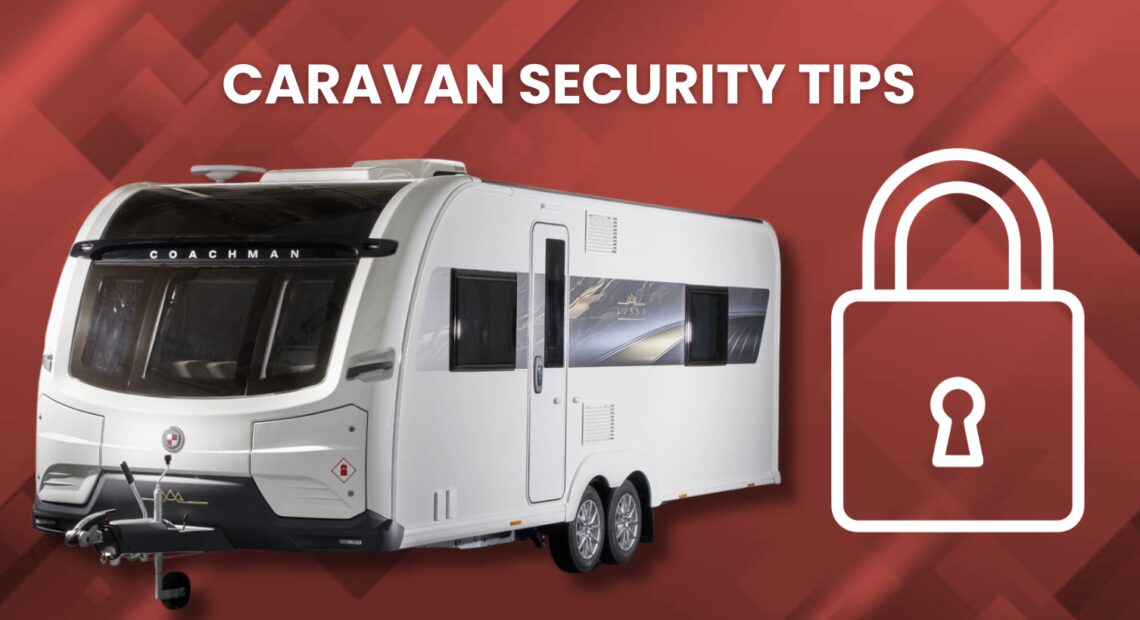
Once the touring season slows down, a caravan may spend weeks or months on the driveway or at a storage site. That makes winter a good time to review your security, rather than just fitting the same lock you have always used. The best approach is to use several layers, so you never rely on one device.
These caravan security tips cover what to fit, where to keep your caravan and how to stay secure when you are away on tour.
Caravan Security Tips: Why Layers Work Best
No single security product covers every risk. A better approach is to combine different types of protection. One acts as a visible deterrent and another makes the caravan harder to move. An alarm or tracker then does a different job again.
Think of it in four stages:
- Deter: visible locks that make your caravan look like hard work.
- Delay: wheel locks and hitch locks that stop it being towed away quickly.
- Detect: an alarm that draws attention if someone tampers with it.
- Recover: a tracker that helps the police find it if the worst happens.
Before you buy anything, read your insurance policy. Many insurers set out exactly which types of lock they expect, and a claim could be affected if you do not follow those conditions. Our guide to caravan insurance explains what to look for.
Which Wheel Lock and Hitch Lock Should You Use?
A wheel lock or wheel clamp stops the wheel turning. A hitch lock covers the coupling head, so the caravan cannot be hitched to another vehicle. Used together, they give two separate physical barriers, and a thief has to beat both.
Many modern caravans have an AL-KO Secure wheel lock receiver built into the chassis. If yours does, a matching AL-KO Secure lock is usually the neatest option. If not, a heavy-duty wheel clamp does the same job.
Our accessory shops at Louth and Worksop stock AL-KO Secure accessories, Bulldog wheel clamps and hitch locks. The team can check which products fit your chassis before you buy.
Do insurers require approved caravan locks?
Often, yes. Some policies set out the type or standard of lock you must use when the caravan is unattended. Others have different conditions depending on where you store it. Check your own policy carefully and keep the paperwork for anything you buy.
Is a Caravan Tracker Worth It?
A tracker does a different job from a wheel lock or hitch lock. It will not stop the caravan moving, but it helps you find it if it is stolen. That makes it an extra layer of security, not a replacement for good physical protection.
Before choosing one, ask three questions. Does it need a monthly subscription? Is it monitored around the clock? How is it powered while the caravan sits unused? Some insurers also offer better terms for approved trackers, so check with yours.
Some new caravans come with a tracker already fitted, so look at the specification before buying a second one.
How Do You Choose a Secure Caravan Storage Site?
If your caravan lives at a storage site over winter, visit before you sign up. Look at the fencing, the gate, the lighting and the CCTV. Ask who has access and what happens outside opening hours.
Many UK sites are assessed under the CaSSOA scheme, which grades security levels. Ask which grade the site holds and check that your insurer accepts it.
Before your caravan goes away, work through our winter storage checklist so it is clean, dry and ready for spring. If you still have a trip or two planned first, our autumn touring checklist covers the essentials.
How Do You Secure a Caravan on Your Driveway?
Keeping a caravan at home is convenient, but it is on show to anyone passing. Where you can, park it with the hitch facing a wall, fence or your car. That makes it much harder to hitch up.
A driveway security post adds another barrier, and the Bulldog range we stock includes posts made for this job. Remove anything valuable from inside, close the blinds and keep the alarm and tracker switched on.
Thinking of using a cover? Make sure it does not hide a missing lock. Our guide to covering a caravan over winter explains the pros and cons.
Our top caravan security tips for winter
Fit the locks your insurer asks for. Check the alarm and tracker batteries. Keep your CRiS registration details up to date. Visit the caravan regularly, even if it is in storage, because small checks catch problems early. A pre-season habitation service is also a good chance to have the alarm and door locks checked.
How Can You Keep Your Caravan Secure on Tour?
Security still matters once you are travelling. If you leave the outfit at a service area or another stop, fit the security devices your policy asks for. Do this even if you only expect to be gone a few minutes.
On site, put the wheel lock on after pitching. Keep keys, documents and valuables with you rather than in the caravan. Lock the door and windows whenever you go out for the day.
After a long spell in storage, check the tyres properly before your first trip. Our caravan tyre maintenance guide covers pressures, age and condition.
Caravan Security FAQs
Do I need a wheel lock for caravan insurance?
Many policies do require one. Check the security conditions in your policy and fit the type it specifies.
Is a hitch lock enough on its own?
It is a good start, but a hitch lock alone can be defeated. Most owners pair it with a wheel lock, and your insurer may insist on both.
Do caravan trackers need a subscription?
Many do, especially monitored systems. Check the running costs before you buy.
What is CRiS registration?
CRiS is the national register for touring caravans. It links your caravan’s identification number to you as the registered keeper, which can help if it is ever stolen.
Need help choosing locks or security accessories? Pop into our accessory shops or give the team a call.
Couplands Louth: 01507 603496
Couplands Worksop: 01909 475220